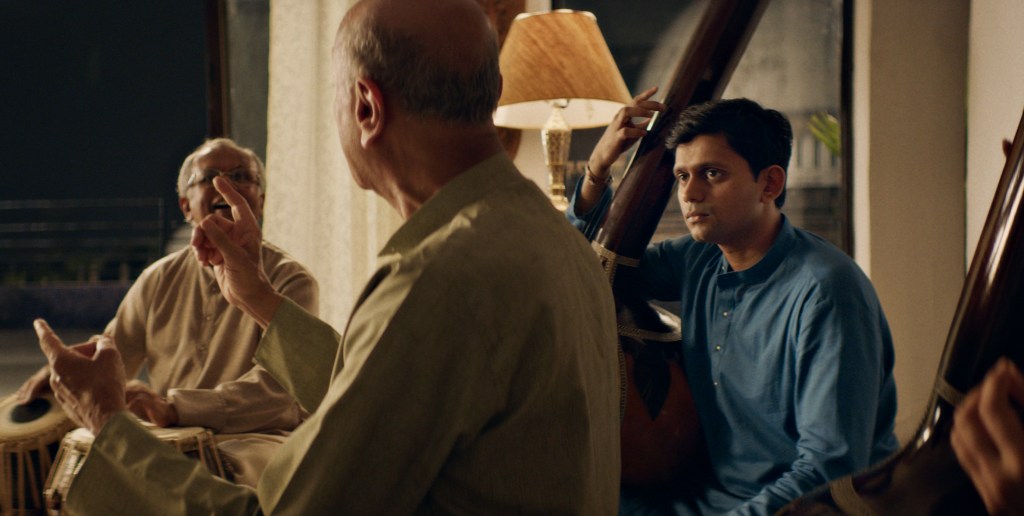
Chaitanya Tamhane opens his second feature with a cut from the black, with what sounds like a slow warbling of Indian Classical Music playing, to the establishment shot of people listening in bliss to the masterful presentation of Śāstriya Saṅgīt (Northern Indian Classical Music a.k.a Hindustani Music). The next cut, the camera sits with the musicians. The lead performer is the master of the students who accompany playing instruments along with the other professionals in his performances. The camera slowly moves in, our attention is slowly shifting as well to focus on one of the students named Sharad Nerulkar, a young and vibrant musician in his mid-20s, enjoying his master’s effortless rendition of a divine Raag (one of the two fundamental elements of Hindustani music) with great admiration.
All it took for Tamhane who is also the editor of the film here was just 90 secs to establish the lead character of the film. He’s young, not only by age but in the art of Hindustani music as well. He admires and respects his guru, and therefore, the art and his musical ambitions are high. Another interesting aspect of this opening scene is the first shot, a high angle view of the performance covering the audience and the musicians as if to signify how sacred the art of Indian Classical Music is considered and practiced and in its eyes, there is no difference. No one is high when compared to the art, neither the master nor the students, they all are equal.
Nerulkar, like most of us, is a simple dreamer. His late father was a failed Hindustani musician and he tries hard not to end up like his father. Part of that asceticism is getting obsessed with the unpublished recording of lectures on what it takes to be a Hindustani musician by Maai, the guru of Nerulkar’s master. He even gets selfish and acts as if he’s completely unaware of any kind of such recordings when one of his friends talks about it. These recordings are presented as voice-overs and the way it’s written is one of many examples of brilliance in Tamhane’s screenwriting. The voice-over happens only when Nerulkar travels but the interesting aspect of it is that the roads are always empty. We never see the stopping point and the shot design is frontal medium signifying that he’s following the art in a lifelong journey, a long & lonely spiritual path where you can see the invisible and an eternal quest of life and in turn the discovery of oneself.
But, for Nerulkar it seems maybe the art doesn’t love him back as much as he loves it. We see scene after scene, the screen is filled with nothing but disappointments. The disappointment, of not being able to win not even the last prize in a local singing competition, and from the feeling of art failing him despite all the practices and meditation in trying to take control of his mind and his art. He gets too distracted, by the failures, and has all the common problems of every Indian youngster & indulges in porn not realizing that art fails no one, and the only thing that’s not letting him reach his ambitions is himself. His mind is so restless and the concentration, the indispensable mind control for an artist is lacking.
With the help of his guru an opportunity for a solo performance comes his way and this is where the film gets even more interesting. Tamhane never shows scenes of Nerulkar practicing, there’s a reason for it and I will come to that later. Nerulkar performs really well and we get a recurring pattern in writing here. He travels by his bike and we hear the same voice-over again but this time, the design of it is that it’s a backward shot instead of a frontal shot, art starting to follow him, or at least that’s what he’s thinking of his music. As the years go by, Nerulkar in his mid-30s faces the harsh reality, he works as a teacher in one of the local music schools for a living, his occasional musical events are not successful. Seeing his friends successful by leading a happy life unlike him, and reading negative comments on youtube saying that his renditions are bland & not improvised, are not helping him either. He is on the verge of ending up as a failure like his father, if not already.
Remember I mentioned that Tamhane didn’t show scenes of Nerulkar practicing?. That is ‘cause he’s been practicing the same exact thing for so many years and if he performs well in the upcoming event. He performed well only ‘cause he may have perfected one of the Raags he’s been practicing all his life but not the art of the Hindustani music which requires artists to improvise and create their own Raags spontaneously. If he in fact, actually did perfect the art, he wouldn’t be struggling when we saw him totally transformed, both physically and mentally, years after that performance.
Reality is becoming the worst enemy for Nerulkar, through television, he sees that the world of music is changing, everything has become a matter of glamor now and there’s no real hope a struggling artist like him can cling onto. During one of his performances when he tries to improvise with the Raagb, but he couldn’t and the realization that he’s not good enough hits him like a wave-current hitting the hard mountain rocks, he gives up and succumbs to despair. After all, one can meander in his own mind feeling cream crackered all his life for only so long when the mind itself is tortured in the first place. Now, the climax is a little devastating but at the same time. It’s subtly beautiful in a way that it gives hope, and that maybe art doesn’t follow everyone but, life, as always, still goes on.
Just like Rohrwacher’s previous films Happy As Lazzaro starts with a dark image as well, I don’t think it’s any coincidence. The image of darkness fading into light feels like an opening of our senses to a new place, to people we haven’t met or heard before, to a new experience.
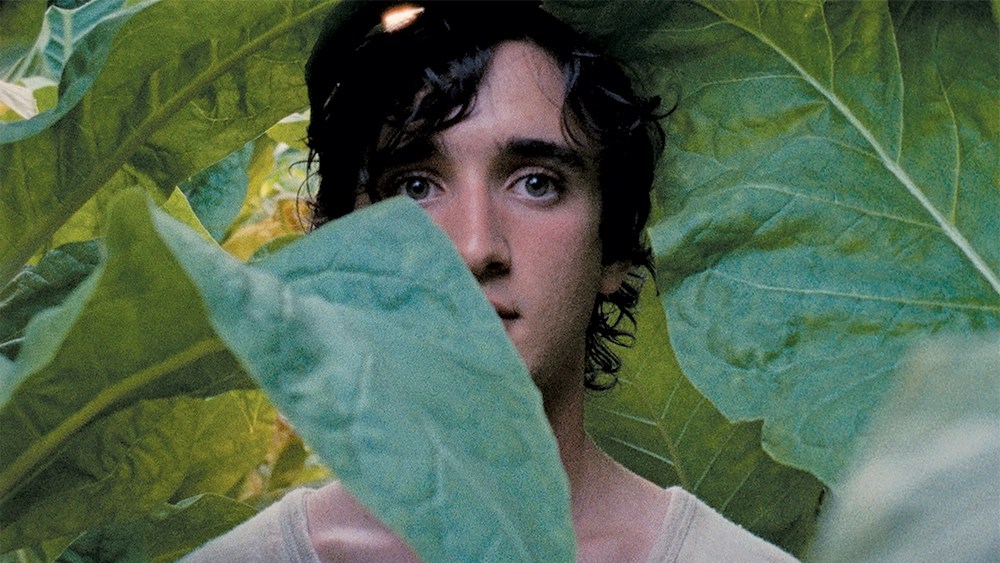
The setup is very simple, a group of people living as a family work as farm hands in a sharecropping arrangement on a tobacco farm on an estate called Inviolata. Lazzaro, the central character of the film is one of those workers. The introduction to Lazzaro is a long shot of him staring into the void in the darkness, he seems so lost.
But just a few minutes into the film we learn that that’s actually him being himself, a person with no mask, one helps others without asking any questions or judging them, an unadulterated soul about whom you can only hear in fairytales. He doesn’t have anyone as a relation except for his grandmother but he doesn’t long for it either. The sharecropping is an outlawed practice but farm workers don’t even know that, they work for nothing without asking any questions trying to clear their debts.
This makes an interesting analogy, in some ways these workers are no different to Lazzaro, both of them obey and follow every command given to them but what makes them different is that farmworkers don’t have the good soul of Lazzaro, the farm owner exploits these workers, the farm hands in turn exploit Lazzaro (he’s shown doing the bulk of the work), it’s like a cycle, a metaphor to the mechanism of capitalism but look where the cycle stops, it stops with Lazzaro, he doesn’t take advantage of anyone but takes all the burden on himself without even complaining.
There are some scenes in the film in which people exploit and mock him that is so devastating but the biggest heartbreak of all comes through this very little detailing in dialogue, some of the farmworkers are relaxing near a water source, they hear footsteps of someone approaching through woods, a girl asks “𝘞𝘩𝘰’𝘴 𝘵𝘩𝘢𝘵” for which an another replies “𝘕𝘰𝘵𝘩𝘪𝘯𝘨, 𝘪𝘵’𝘴 𝘓𝘢𝘻𝘻𝘢𝘳𝘰”, this is one of the many brilliant moments in the film, use of just three words as a dialogue to indicate that most of the workers don’t really care about Lazzaro but that’s what purity and selflessness bring to someone, it’s not only a thankless quality to have but in Lazzaro’s case its a threat as well.
Tancredi, the son of the farm owner after being fed up with his mother for controlling him befriends Lazzaro and fakes his own kidnapping to get some money from his mother as ransom but his mother sees through this act so the random never arrives. Tancredi is alone in the harsh badlands, he needs someone to accompany him so when calls Lazzaro his half brother, Lazzaro stops for a minute and that’s the first time we hear a piece of music that’s not used to establish a landscape or an event in the film but to transport the melancholy of a character, it’s his first time hearing someone calling him by relation and it means something to him and takes it so seriously.
But, unfortunately, he can’t spend more time with Tancredi ‘cause he has to work on the farm but Tancredi doesn’t understand this and says that a half brother doesn’t leave another all alone in this wilderness. Lazzaro after hearing this and being returned from the uphill to the farm goes staring into the void again. This action of him staring into the void is so important in understanding Lazzaro, it happens after the crucial moments in the film and it’s almost like a reflection of him feeling overwhelmed in fact there’s an actual shot which is a reflection of Lazzaro in the water when he’s staring into the void after not being able to accompany whom he thinks as his half brother.
If there’s ever gonna be a list of the most cinematic moments in films of the last decade, I don’t think the list would be complete without the magical genre twist in Happy as Lazzaro, it’s something that’s so magical and reminds you of the real power of cinema. So, Inviolata is now completely abandoned and many years later Lazzaro reunites with Antonia (one of the farmworkers) and her family in the city but he is the same person as they last saw him, the same innocent soul as they last remembered and for Lazzaro nothing is changed as well, he starts looking for his half brother and when Lazzaro eventually finds his half brother by accident Tancredi invites him and Antonia’s family to his estate for a lunch. But when Lazzaro and Antonia’s family arrive at his home, Lazzaro learns that he is not rich but completely broke and the bank is to blame for it.
The next sequence is one of the purest moments in cinema that I have seen, Lazzaro goes staring into the void again and for the first time in the entire film he sheds a tear and that’s not ‘cause Tancredi lied to him but ‘cause Tancredi is actually broke and he feels so sorry for him.
The ending to the film more than being magical is so devastating, it’s almost like a statement stating that a man who is so pure, so selfless, and who is almost a saint-like Lazzaro can’t survive in this capitalist world where greed and selfishness are the qualities that humans must have in order to survive. Lazzaro must die and by which he becomes a lone wolf and goes to a better place.
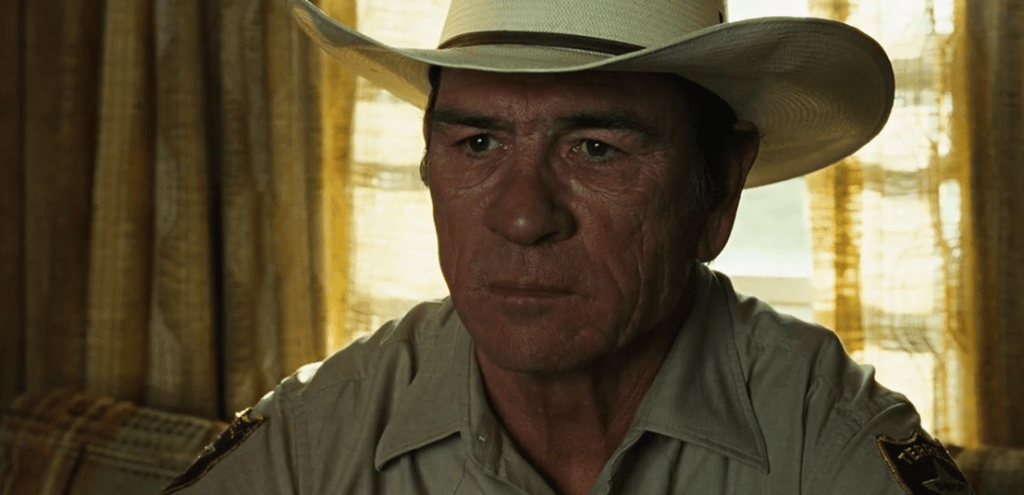
Coen Brothers’ adaptation of Cormac McCarthy’s novel, No Country For Old Men is nothing like your usual neo-western but the complete deconstruction of a classic good vs bad tale. As in each of those stories you have here, a good guy, a bad guy, and then a morally sound and honest cop but the conclusions to each of their stories are not what you would expect from a setup like this. The good guy dies, the bad guy, even after all the crimes he has committed get to live and the cop never meets any of these two men or even a chance to fire his gun for once. And, the story doesn’t end in action but from a very silent monologue cutting to a black screen, it ends with a question mark.
In many ways, No Country For Old Men is about certain things we never understand, about somethings that the harder we think for them to make sense, the more absurd they feel. What are those things? Well, they are just humans, their greed, their obsession with wealth, their inability to distinguish things that are as simple as right and wrong, good & bad, sane & insane, moral & immoral, and above all, it is the very moral ingredient of good and evil. The film never tries to answer these questions but treats them with dualities and the contrasting POVs.
Throughout the film, there are so many visual showcases of these dualities via the perfectly constructed and composed shots of Roger Deakins but the ones that are more striking and thematically more coherent to the film are the dualities exhibited through text. The coin in No Country For Old Men is more than just a metaphor for how Anton Chigurh (Bad guy) approaches and treats anything in life. It is a tool to bring out the duality between the two characters in the film, Chigurh and Tom Bell (Sheriff). Chigurh goes to Moss’s trailer home, drinks milk gazes at the TV, and in the very next scene, we see some similarly composed shots of the previous scene. Bell drinks the same milk, sees the same things that Chigurh saw, and just like how Chigurh is entrapped within his own principles (image inside a tv) we also get a similar image of Bell entrapped within his own principles. But, they both are entirely different characters with morals that are as contrasting as black and white. For Chigurh, something that is so large as life and death is just a matter of a coin toss, for him everything in life is simple and nothing seems so absurd. On the other hand, we have the Sheriff, trying to make sense of human nature and their behaviors.
Another on the nose display of duality is from these following two scenes. 1) Moss gets hurt, and in an awful looking condition somehow reaches the Mexican border. He sees a group of three men coming from the other side of the border, offers money to buy out the shirt of one of them but the man shows no pity and insists on seeing the money first. That’s not even the worst part, Moss after buying out the shirt asks for another favor, the beer from another man but no pity shown this time too but only the greed. 2) Chigurh is hit by the car, a bone sticking out of his left hand, he’s in a very bad condition, Chigurh asks for the shirt of one of the boys. Now, the setup is very similar to that of the first scene but instead of fully grown-up men we have here, three teenage boys. And, instead of greed and unkindness, the boys show willingness and heart to offer help, they refuse to take the money that Chigurh offers for the help.
But, the biggest duality of all is the one we, the viewers know about, but those 3, boys and men don’t, it’s that Moss is a good man and that he has ended up in this mess not ‘cause he took the drug money but he went out in the middle of the night to offer water to one of the wounded cartel men. Whereas, Chigurh is as evil as a human soul can become. So, what’s the difference between being good & kind to one another and being bad & evil, anyway it all comes down to the four-letter silly word called ‘Fate’, right ?. No, the film doesn’t advocate that either, following the morals and having principles are good or whatever but it’s just that nothing in life comes with a guarantee and the explanation for this absurdly harsh reality can’t be found, not even through cinema.
A lot of people talk about The Masterand There Will Be Blood, they are masterpieces and I’m not here to deny it and in fact, The Master is my best film of the last decade along with Portrait of a Lady On Fire but I find the first three films of PTA lot more interesting to look at from technical perspective and I learned a lot from these films and it helped me to understand his film language too.
The thing about long takes is it’s so tough to get them right. If you have more characters especially in motion the blocking becomes complex and if you have them in motion, the fluidity of the shot goes for a toss, it’s hard to get desired composition right, sometimes the director should compromise with the angles, there are timing problems, the actors shouldn’t fuck up their lines so a lot of rehearsals should be done and the complexity of them keeps on increasing if you add more and more layers and it becomes a nightmare to pull off. Despite these risks and the cost involved here if a director decides to go for a single take shot, it’s definitely more than just a gimmick and they believe it adds something to the storytelling and in doing so enhancing the film viewing experience (I’m only talking about films that makes sense here lol).
Clips from Sydney, Boogie Nights, and Magnolia
As long as these takes add value to storytelling and character establishment I just don’t mind people saying he’s just ripping off from Scorsese or Jonathan Demme because look what PTA achieves here with these long takes :
1) Sydney – The camera follows Philip Baker Hall from the front, goes across other people in the casino, tracks back to follow him again, and then settles when he finally stops to play. This 70 secs shot alone makes so much sense of what he does and how the casino is part of his life.
2) Boogie Nights – The camera stays too short on characters, not more than 15 secs for us to remember any of them and it just keeps on moving. There are two things here :
a) this is a simple way to introduce as many characters as possible within a short duration.
b) it’s just a night club you meet a lot of unknown people there and when you wake up the next morning you don’t remember shit and this 171 secs long take signifies exactly that and creates that restlessness and mood of a nightclub.
3) Magnolia – This long take is a lot more interesting than the other two, the movement here doesn’t have any meaning, it’s almost senseless but that’s how the atmosphere of TV studios will be, right? and it just captures the urgency of a TV studio before air time (some Network(1976)influences here) besides the cinematography being a meta to film’s screenplay and providing some crucial information via dialogues.
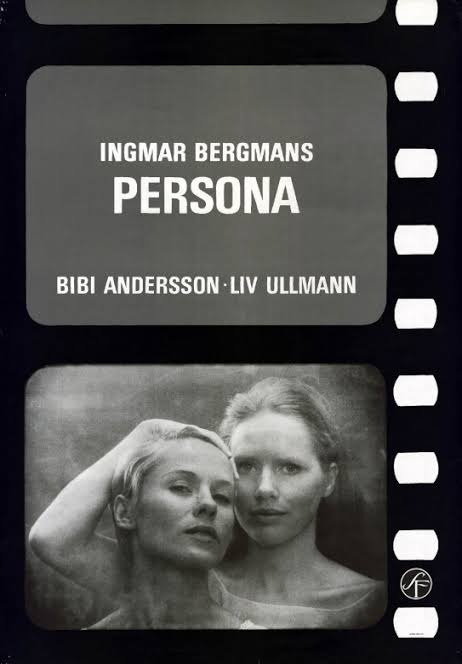
Persona begins with some random shots of earliest cinema and ends with the shot of a film roll that is getting over and the projection seems to end as if to indicate that whatever we witnessed between these are not reality but lies. The lies that we tell ourselves to become someone else (a persona) and film in doing so, really gets into the human mind which becomes so dangerous in the state of the non-existence of one being and becoming another. Bergman uses this interesting setup to explore the struggle for identity, destruction, conflicts, and duality of one such mind.
It’s very interesting for me to find out how Bergman first got the idea for the film. He said that when he was undergoing an operation he was given anesthesia where he lost space & time, and become non-existential to the real world. He felt that this non-existentially of a human mind is very dangerous because there’s no restriction in the unconscious world and we can become whoever we want and do whatever we want. The characters seem to get along so well, Bergman shows us this delicate intimacy and them sinking into one another through some of the most studied shots in the history of cinema.
But, Is the human mind that simple that we can become someone else so easy? that’s where all hell breaks loose. When Alma finds out that something is wrong and Elizabeth is using her, she becomes mad and wants Elizabeth to speak, to not lie anymore, and to reveal the truth. But, Elizabeth, not falling for her own mind games, only speaks when the Alma tries to destroy her (tries to splash hot oil), but then too she never reveals her identity. When Alma finds out what Elizabeth wrote about her in the letter, she leaves a piece of glass deliberately to hurt Elizabeth but the irony here is Alma is the persona that Elizabeth created and Alma’s role is to nurse Elizabeth.
And, what happens next, when Elizabeth steps onto the glass is one of the most cinematic scenes of all time, the screen literally breaks and burns to show how all the lies Elizabeth is telling herself works no longer and reality has hit her, a brilliant showcase of vulnerability and unpredictability of the human mind.
Remember I mentioned how Persona starts, it starts as if we are going to watch a film inside a film and the second film is the one that happens in Elizabeth’s mind, all lies. One of my favorite scenes in the film is when Alma asks Elizabeth to say “no, it’s nothing”, a brilliant scene to indicate that Elizabeth finally speaks and comes out of the non-existence and we also get a shot of her acting in a real film.
I consider a film like this as a contribution to the modern art that is to be studied and should be looked at from a personal perspective because a view of someone else may look stupid to me or vice versa. Maybe my interpretation of the film may change over the course of time or on re-watch but what’s very important is to experience art that is so ambitious and to draw our own conclusions on it.
Thiagarajan Kumararaja’s second feature film Super Deluxe is a hyper narrative dark comedy cum drama but to be honest you really can’t fit the film into genre(s). I don’t want to go into this so called ‘decoding of the film’ thing but what I want to talk about here is the larger picture of what the film is really about and the impeccable film making of it which makes the film to really stand out. The very first time I saw Super Deluxe, I was so focussed on getting the little details and the plot but in doing so I missed the bigger picture. In spite of that ,the film still spoke to me and I was so eager to watch the film again and I’m glad I did. That’s the thing about revisiting a film,isn’t it ?, you keep finding new meanings and little nuances each time.Super Deluxe on a surface level may look like a way too ambitious attempt to pack everything starting from how a life is created (i.e) sex to the infinity (i.e) the very meaning of existence of Universe but what the film really aims at is how certain things that are believed to be impious and profane or moral and immoral actually happens ,is it because of coincidence or is it because of one’s faith in God or is that something beyond explainable ?[1]. Now,whenever a writer(i’m talking about writers with a clear vision here lol) plans to write a screenplay the first thing that comes to his/her mind is the idea or thesis as Dir.Ram calls it and the story n characters are just tools that he/she creates for transforming the thesis into an interesting narrative. The same way Thiagarajan Kumararaja uses four subplots to explore sanity,sex,morality,religion,profanity and by doing so eventually answers the above question[1].
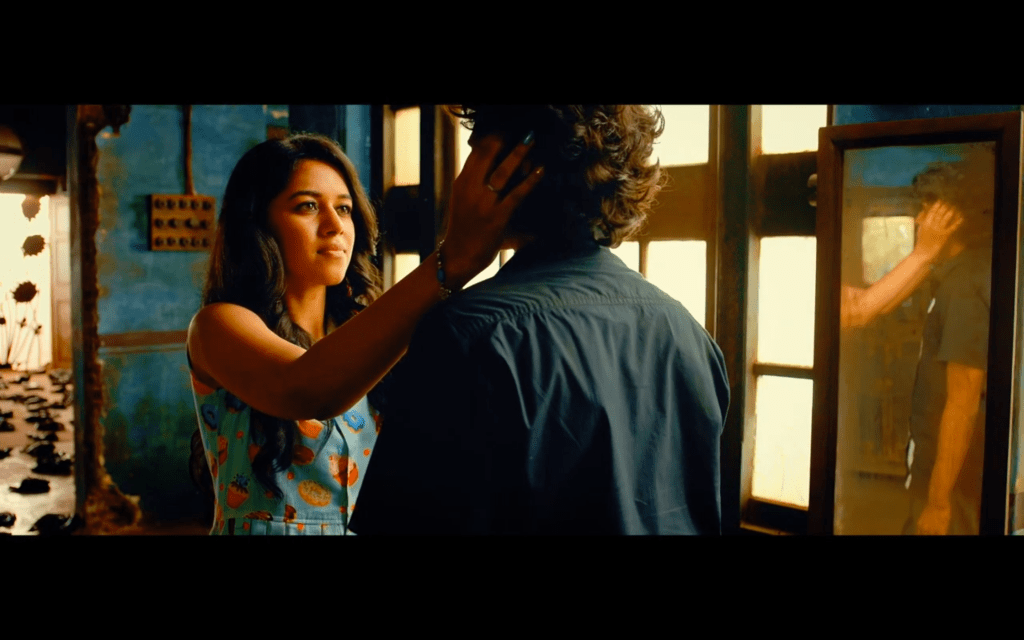
Now,the film takes place on two days,the day when Shilpa played by the brilliant Vijay Sethupathi returns from Bombay and the day after it.The interesting thing about this subplot is it’s slightly different to other three subplots.The reason I say this is there’s no such thing that u can call as either coincidence or godly happens in Shilpa’s life but you can’t say the same thing about her actions as it affects others lives, I will come to this later[2]. Having said that, Is it not inexplicable that how Shilpa felt the way she felt about her sexuality ? May be yes or may be no, little confusing right ?. Now, this is how exactly Kumararaja treats the entire film, he treats it with duality. There are many instances in the film where the duality is constantly thrown into the narrative like 1) how a man who cares so much for a centipede happens to an evil sex predator, 2) the contrasting colors of blue and reddish orange used throughout the film, 3) how come a man who speaks so right about the hypocritical nature of casteism and seems to have contemporary thoughts suddenly goes “iva periya pathini currenta vaanu sonna vandhurathuku” (“as if she’s a sacred virgin for the electricity to come when she asks for it”) when he is in the crisis/trouble and 4) how can a world judge a woman when she has acted both in a ‘Amman’ (‘Goddess’) movie and in a softcore porn film. But one striking and on the nose instance of duality is when the Alien(of course,I will come back to this alien thing later), played by Mirnalini clones/splits the Gaji character into two. Now, this is the direct reference to the famous Schrödinger’s cat theory [fig:2]. To put it in layman’s terms Schrödinger’s through his thought experiment says that “a particle can remain in a dual state at a same time”. Also see how Kumararaja frames the scene of the cloning here[fig:1],Gaji stands in front of the mirror facing the Alien and you see the mirror image of him just when he’s about to be get cloned, again indicating daulity. Now, the most talked about thing in this film, an Alien and I was so surprised by it because there’s so much to talk about and they chose a fucking Alien. I don’t get it when people say that everything is fine about the film expect the invasion of Alien out of nowhere. First of all you can’t say that it came out of nowhere when we clearly get audio and visual clues about the alien throughout the film. But what does is it actually mean/signify?
fig: 1
fig: 2
There are two ways I look at this thing, one from the thematic POV. Let me explain – the name Alien literally means unfamiliar,right ?. We don’t know what that creature is so we named Alien.The same way we always treat something that we don’t understand at that moment just like how the whole world at one point of time considered homosexuality , a criminal offence and now it’s almost legal everywhere.The creature that appears in the film,a weird figure i must say may become a normal thing after who knows how many years but the thing is you never know what will happen in the future. Also,there are dialogues in the film to support this claim. For instance the RamyaKrishnan character says “10,000 varusathuku munnadi yaaravadhu thuni pottagalanu theriyadhu 100 varusathuku aprum yaaravathu poguvaggalanum theriyadhu,ippa vaaldra makkal athu seri ithu thappunu solluvagga aprum avagga vasathikku yetha mari avaggale mathippagga” (“we don’t know people wore anything before 10,000 years n we also don’t know if people will wear anything after 100 years. the people who are living now will say that is right and this is wrong but they also change them to their comfort” ), just to put it in nutshell, what is considered to be right now may be considered wrong in the future or vice versa and the Alien is just a metaphor for all those things that are considered by many as a taboo now. The most interesting aspect of viewing the whole Alien thing this way is that how it provides a direct metaphorical connect to the story of Shilpa n how the society treats her.. It’s so fucking amazing how the film connects the subplots via subtext without even making the characters meet, it’s just brilliant writing..
The second way of seeing it is from the narrative POV – there are two extraordinary contradictions in the film one being the dialogue from the Arputham character played extraordinarily by Mysskin after that superb tunnel scene (i will come to this scene later) that goes like “Kaasu venumnu andavar kitta ketta onnume kadaikula andavare illanu selaya odaicha vairama kottuchi..avara odachathunala tha kadaichatha,ithanala andavar illandratha illa avarukkullarundhe kadaichathanala andavar irukuranu soldratha” (“i asked for money to god and nothing happened but when i said there is no god and broke the statue it poured diamonds. Now, what should i make out of this ?. Should I assume that i got diamonds because i said there’s god ? or should i assume that God is real because i got the diamonds from him (god statue)?”) and the other one being the contradiction between morality and coincidence drawn from the fact of how the lives of Shilpa and Berlin end up in the movie. Let me put this way – the fact that Berlin ends up dead, is it because Shilpa has cursed him or is it just an coincidence ?.These two contradictions are direct influences from the Paul Thomas Anderson’s third film Magnolia. In Magnolia, just like in Super Deluxe the characters are caught up in extraordinary situations and an extraordinary event happens (i.e) a frog rain occurs (just like the Alien here) now just before the frog rain two characters decide to commit suicide but because of this rain one’s life is saved n although the character doesn’t die at the end she did not get saved because of this frog rain but its an another coincidence altogether. I don’t want to go deep into Magnolia here that’s for an another day but you can get both the duality and contradiction here,right ?. In Magnolia P.T.A leaves it to the audience to figure out this contradiction and duality but Kumararaja in Super Deluxe chooses to take sides, he says it’s all coincidence.
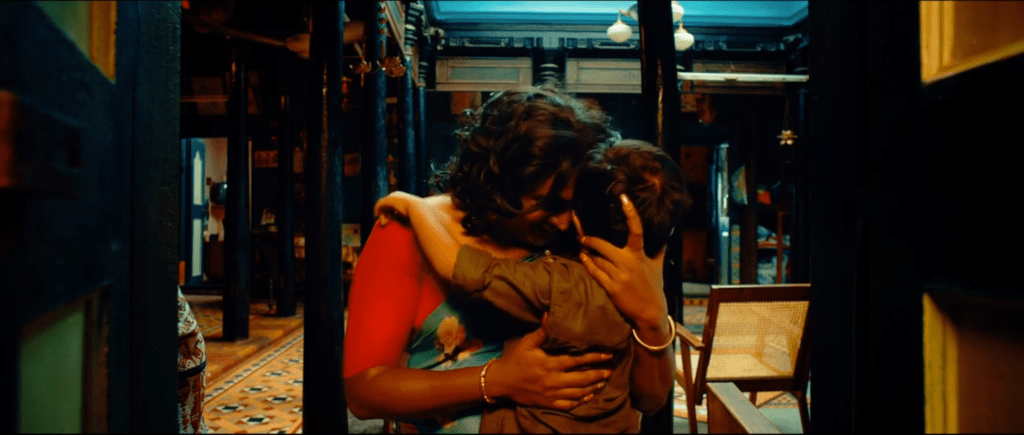
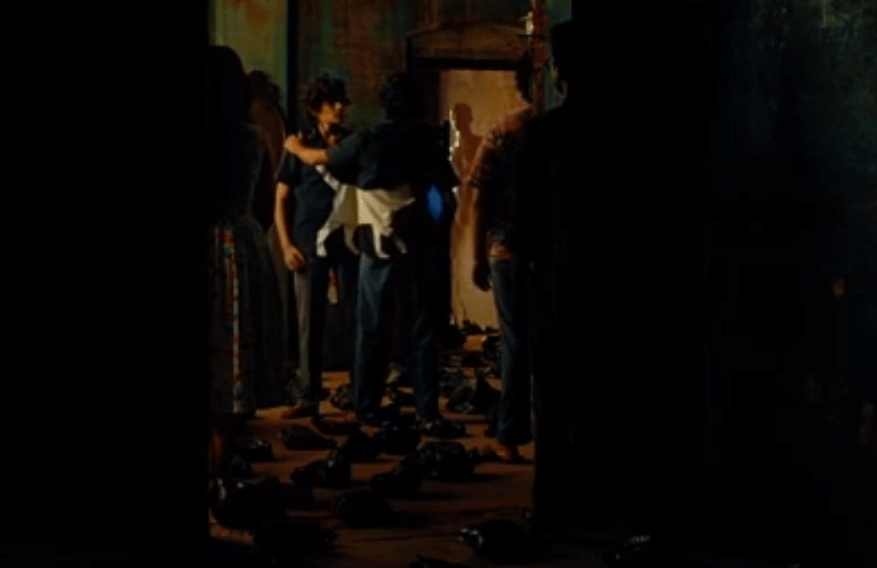
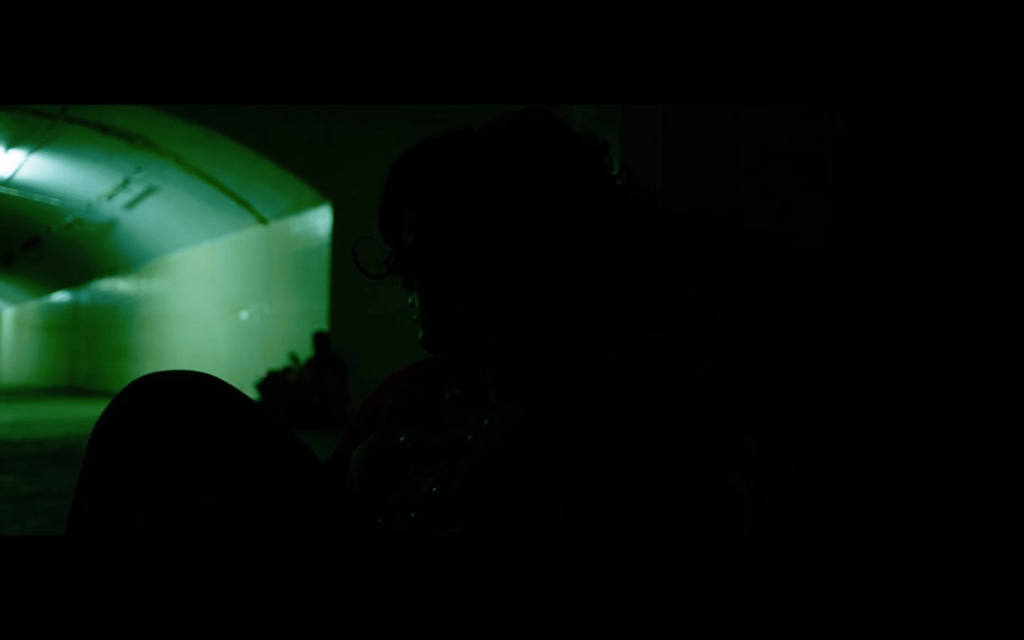
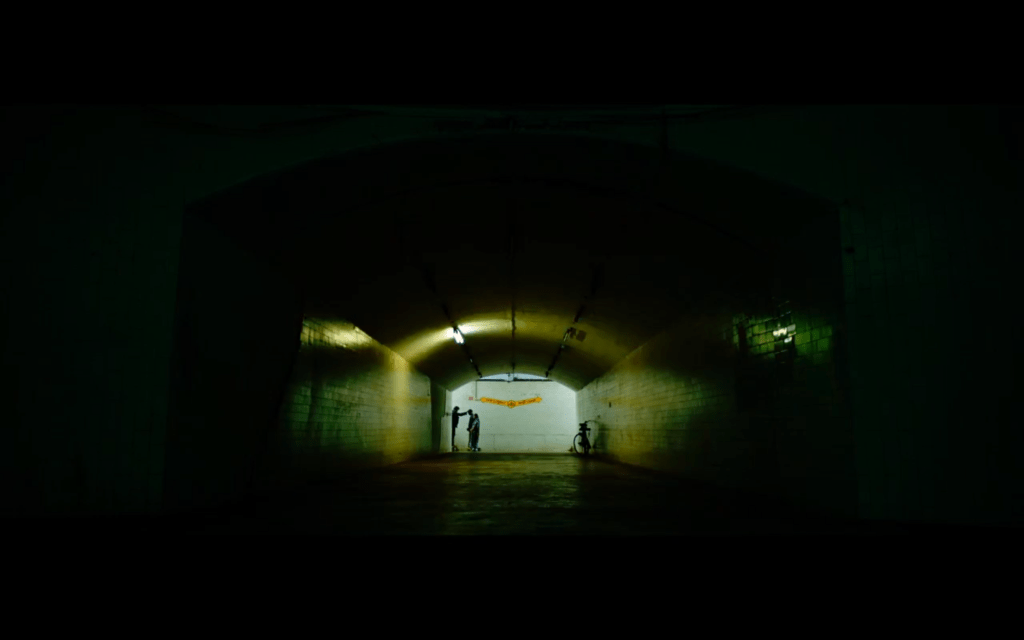
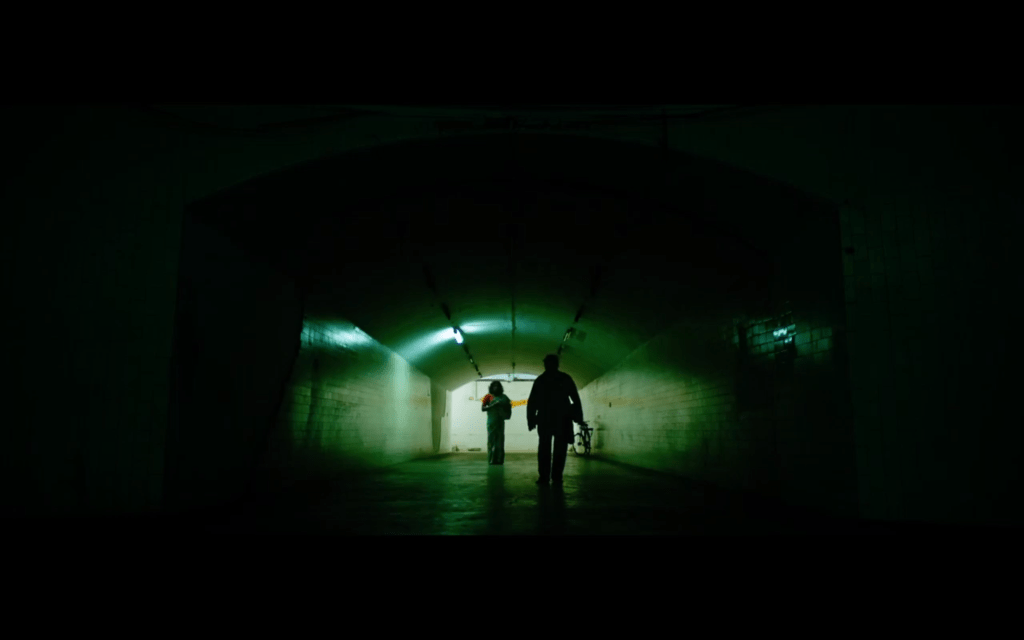
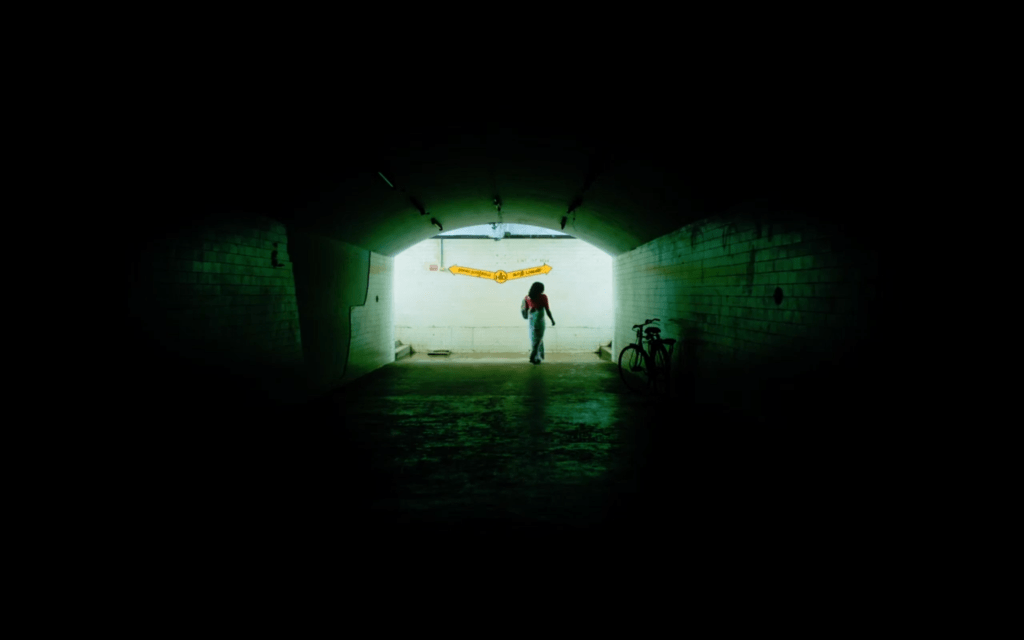
Now, how can you say this to the audience 1) a voice over, 2) intervention from a mysterious character, just like in Coen brothers The Big Lebowski and 3) breaking the fourth wall, like in Bong joon-ho’s Memories of Murder and Kumararaja chose the second option here and it’s just that the ‘mysterious character’ here is an Alien and that is it, it’s as simple as that. Coming back to the tunnel scene look how the scene starts off [fig: 3],Shilpa sitting in absolute darkness as if she was completely lost and don’t know what to do next and look where Mysskin is framed [fig: 4], at the end of the tunnel as if he’s the light for Shilpa’s problems but what’s so interesting about this scene is that how the characters transform and the same way lightning changes too (i.e) after Mysskin comes to know that he is not the only one who got saved from Tsunami by holding onto the stone(a Jesus statue) look how the lighting was done here [fig:5] now, Mysskin is in darkness and [fig: 6] shilpa walks towards the end of the tunnel where the light is (a help in the form of a constable to find her son). It’s just pure visual storytelling..
fig: 3
fig: 4
fig: 5
fig: 6
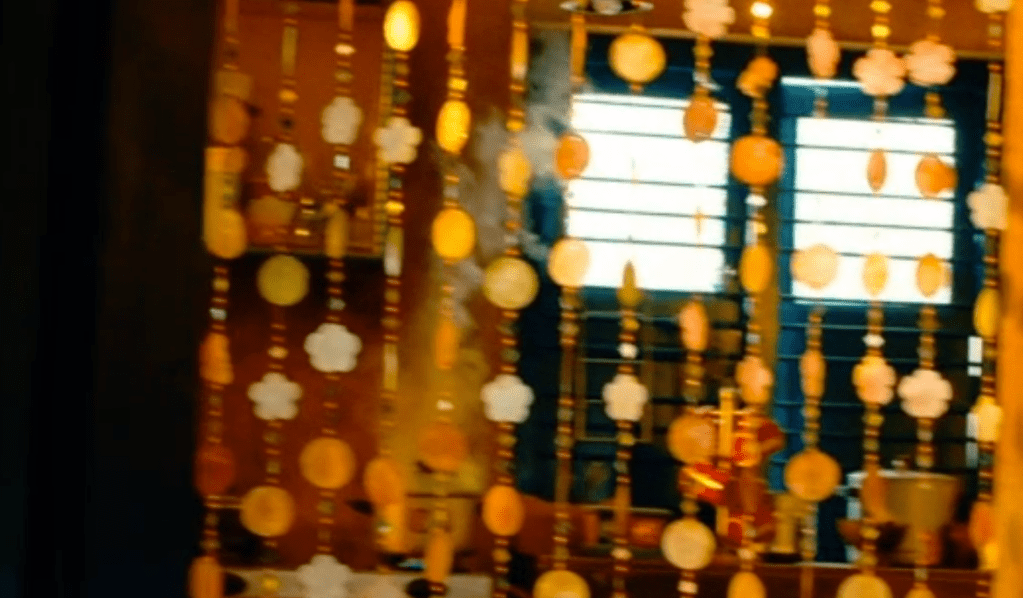
Another thing about revisiting the film is you catch visual comedy a lot more. The same here with Super Deluxe too. For instance [fig: 7] you see a steam cooker just after the title card. I don’t want to a write a paragraph connecting steam coming out of a cooker and a sex scene that happens after it lol. I know you people will get it.
fig: 7
Also the name of the Video Store where the boys buy a porn CD, of all the name in the world it’s named ‘ANNAI VIDEOS‘ and also when the lady takes out the porn cd which is inside a drawer,we see a CD of 1979 k.Vijayan’s film called Thirisoolam.The thing about visual comedy in Super Deluxe is how these little details does not end up being only comedy but also adds to the overall vision of the film,what I mean here is you only associate words like ‘Annai’ and ‘Thirisoolam’ only with that of sacred,right.But look where Kumararaja uses them, in a fucking video store that sells porn disks.Apart from these, the most wtf moment for me is the ‘Request Card’ [fig:8] from the man (moodman78@hotmail.com) who made the porn compilations.
fig: 8
Now , is Super Deluxe an original film,hell no. There are lot of influences starting off with the biggest influence for the film being P.T.A’s Magnolia, Coen Brother’s No Country For Old Men and the style n some aspects of writing were very similar to Tarantino, Guy Ritchie, David Fincher Alejandro González Iñárritu and many more. Is it a perfect film,this again a no too.Acting in some places seems off and the certain dialogues could have been better.But what is it then about Super Deluxe by TRK made me to write this. The braveness that was put into writing by this guy and he’s being producer too,look it’s not at all easy to make these kind of films and I’m not talking about the difficulties involved in filmmaking here but the actual content of the film and to execute in a way he did, this exactly what made me to write a piece on it’s one year anniversary. Kamal Haasan when speaking to The Statesman once quoted “It’s almost like when you find a director on your own and then he/she becomes a great director, you become very parental towards the person. You feel proud to see your son grow, however old he/she can be, it doesn’t matter” and my feelings for Thiagarajan Kumararaja is exactly the same. Super Deluxe is a special film from a special filmmaker that I will cherish for a long time and I got this feeling that we are yet to see his full potential and i’m sure there’s lot more to come. So until his next film (who knows how many fucking years), May the Force be with him.
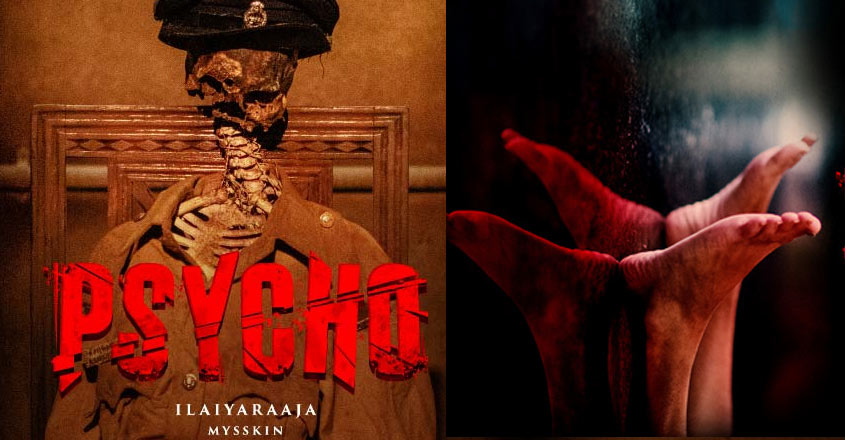
There’s nothing much to do talk about here as far as narrative is concerned so I will just stick to the production.Pyscho(2020) by Mysskin occured to me as a film that never really gave a fuck about its characters,mood and details for it to be about a Serial Killer…Also it seemed like Mysskin too didn’t care about his brilliant and dark world building which was his signature in most of his movies..
These things never really disappointed me but the music oh my god,I mean the score is brilliant but the usage of it made no sense..It was almost as if “ok we got a really good piece of music from Raja so let’s use it everywhere to an extent where audience really feel that the score was indeed amazing” thing throughout the run-time.I strongly believe that film music(not songs) and choice of instruments really acts a tool in moving the film forward.It takes a really versatile Music Composer to write and produce the kind of music that acts as an another form of storytelling.Wat surprised me the most is that of all people Raja choose not to be the decision maker on placements of scores and its duration.What a pity…
To put it in a nutshell Psycho (2020) is a pig lazy attempt that rely heavily on its photography but not on Cinematography, writing or for that matter any other technical or physical aspects of filmmaking…
 CiNeMA ReTroSpecT